
30 YEARS OF EMMA: Building Europe’s primary mouse mutant repository
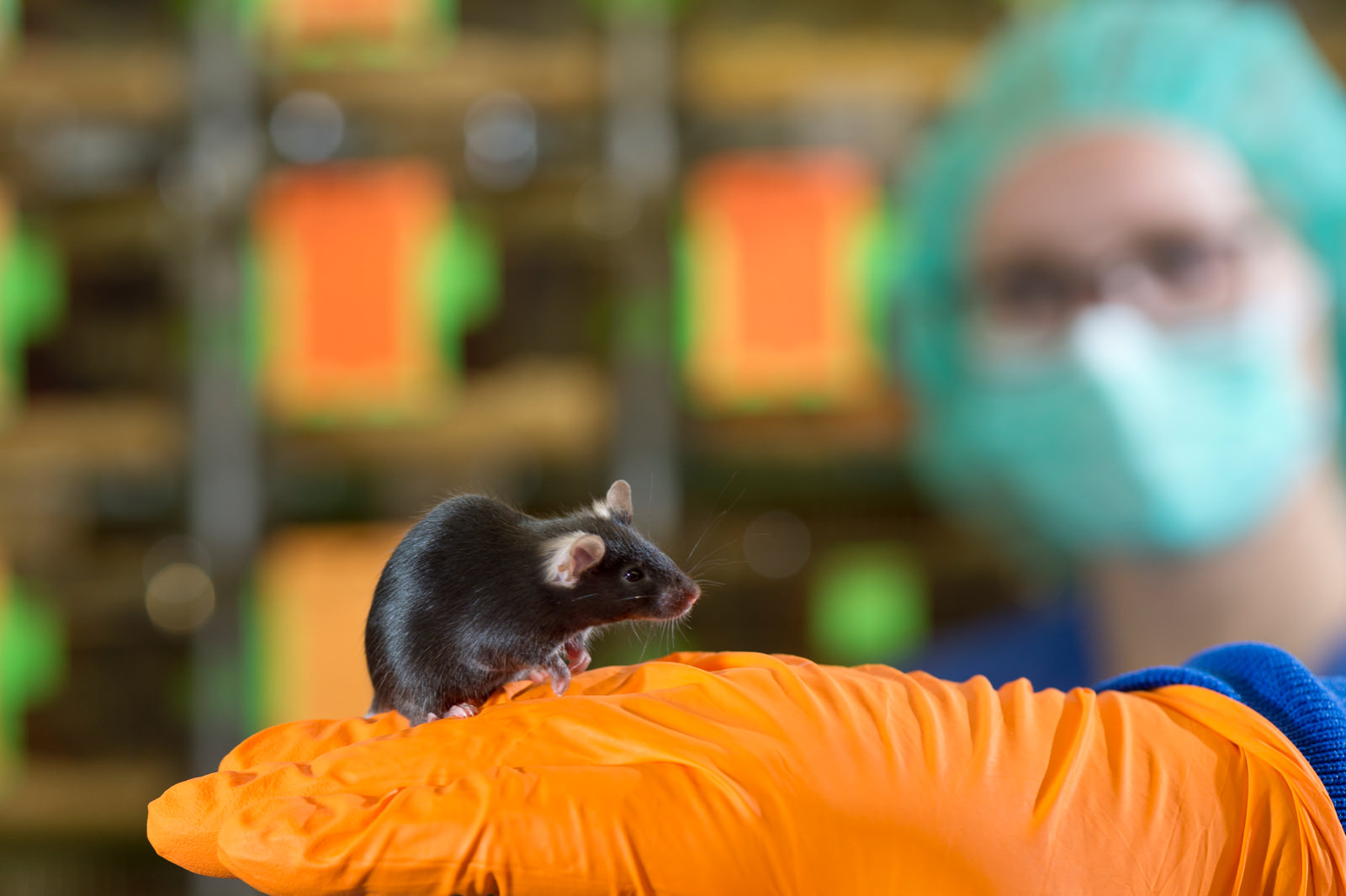
This month (April 2026), the European Mouse Mutant Archive (EMMA) reaches a significant milestone: 30 years at the heart of biomedical discovery. What began in the mid-1990s as an ambitious idea to safeguard genetically modified mouse models has grown into Europe’s largest repository of mutant rodents and one of the most important biological archives in the world.
Over the past three decades, EMMA has played a central role in preserving, distributing, and standardising genetically modified mouse strains that are essential for understanding gene function and modelling human diseases.
THE FOUNDATION OF EMMA
The concept of a European repository designed to archive, protect, and distribute the increasingly wide range of genetically modified mouse strains first took shape in April 1996. Inspired by genetic stock centres for organisms like bacteria and fruit flies, the initiative was led by Prof. Peter Gruss, Prof. Peter Rigby, and Prof. Glauco Tocchini-Valentini. The project was further supported by internationally renowned scientists such as Dr. Barbara Knowles and Dr. Davor Solter.
The launch of EMMA was formally presented to the international scientific community in December 1996 during an OECD-sponsored workshop in Rome, where the European Commission announced its support. Dr. Marcello Raspa, a junior scientist at the time, recalls: “Participating in an international collaborative project such as EMMA was an extraordinary opportunity to collaborate with researchers from different backgrounds, exchange ideas, and contribute to advancing knowledge in a meaningful way”.
GROWTH AND EVOLUTION
Prof. Martin Hrabé de Angelis was appointed as the first director, securing funding from the European Commission and national support through projects like ArchiveFrontier. Together with the EU network project PhenomeFrontier, both initiatives were integrated under the single umbrella of INFRAFRONTIER in 2007. With its steady growth in ambition and scale, INFRAFRONTIER became a landmark project on the ESFRI (European Strategy Forum on Research Infrastructures) roadmap.
Initially established as a limited liability company (GmbH), the network transitioned into a European Research Infrastructure Consortium (ERIC) in 2024. “This transition secured long-term sustainable funding for EMMA through the commitment of its member states”, explains Dr. Michael Raess, current Administrative Director of INFRAFRONTIER ERIC. Helmholtz Munich serves as a partner site and is also the headquarters of the INFRAFRONTIER ERIC team.
WHY BUILD A BIOARCHIVE?
Biological repositories like EMMA are indispensable to modern research, acting as both custodians of progress and catalysts for discovery. As Dr. K. C. Kent Lloyd, Professor of Surgery and Director of the Mouse Biology Program at UC Davis, puts it, “Biomedical research has seen a tremendous expansion in the number and quality of genetically altered mouse models over the last 30 years… dedicated and centralised public repositories have ensured the availability and accessibility of these valuable scientific resources for researchers worldwide.”
Mutant animal strains developed to answer one specific research question often find new relevance years later in entirely different fields, making their preservation essential. As Prof. Johannes Beckers, current Scientific Director of INFRAFRONTIER ERIC, explains: “By allowing scientists to archive and retrieve mouse strains on demand, repositories like EMMA help minimise duplication and support the implementation of the 3R-principle: reduction, refinement and replacement”. This reduces costs and accelerates innovation while ensuring that publicly funded materials remain accessible to the global scientific community.
FROM INCEPTION TO IMPACT
EMMA was envisioned as a coordinated, decentralised European network rather than a single facility. Today, EMMA is the third-largest non-profit mouse repository globally, housing over 9,500 strains and serving researchers in more than 50 countries. Its models have supported critical studies, for example, on liver cancer, primary lymphedema, neurovascular signalling and many other diseases.
Its strength lies in its reach, with specialised partner institutes across the continent:
Austria
Czech Republic
Finland
France
Institut Clinique de la Souris (ICS)
Germany
INFRAFRONTIER ERIC
Greece
Israel
Italy
Portugal
Spain
Sweden
The Netherlands
United Kingdom
Mary Lyon Centre at MRC Harwell
“Working with EMMA every day makes it very clear that the infrastructure is far more than the sum of its individual sites. It is the shared standards, trust, and long term commitment that turn a distributed network into a reliable resource for the global community”, points out Dr. Sabine Fessele, Head of Operations & IT at INFRAFRONTIER ERIC.
LOOKING AHEAD
Looking to the future, EMMA’s development aligns with INFRAFRONTIER’s vision of integrating mouse models with advanced cellular systems, such as organoids and organ-on-chip technologies. As Prof. Johannes Beckers explains that the future of biomedical research lies in a synergistic and intelligent combination of in vivo, in vitro and in silico models. Dr. Anna Moles, current Director of the Consiglio Nazionale delle Ricerche (CNR), in Italy, adds that EMMA and INFRAFRONTIER will play a key role in connecting animal models, advanced in vitro systems, and computational approaches to better predict how genetic and environmental factors interact to shape health and disease.
For those involved from the start, EMMA’s legacy is also about the tight-knit community. Dr. Rafaele Matteoni reflects: “The friendships built along the way mean just as much as the results we have achieved”.